

🎬 What Can “Nuremberg” Teach Us About Leadership?
The Castle and the Ground Floor: When Trauma Becomes a Map for Power.
🚨 SPOILER ALERT!
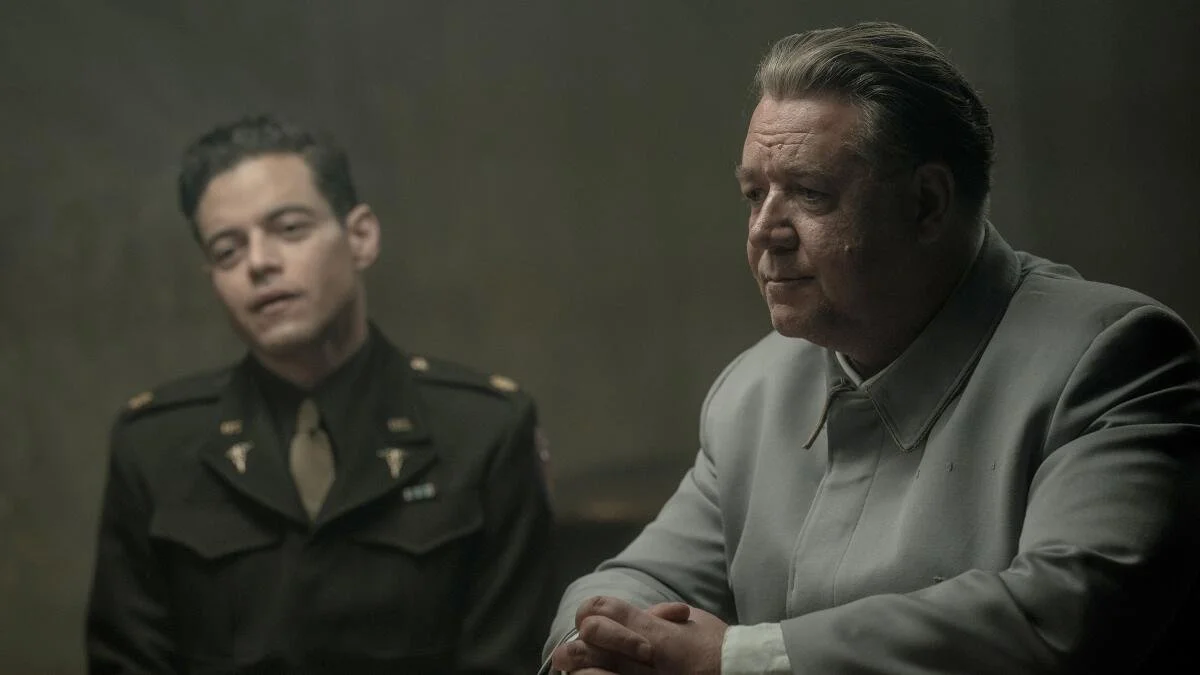
In the historical drama Nuremberg, the trial of the century is distilled into a quiet, claustrophobic cell. The most profound leadership lesson arrives when Hermann Göring (Russell Crowe) finally strips away the "Reichsmarschall" persona to reveal the wounded child beneath.
It is a story about Attachment Trauma and the dangerous moment a person decides that power is the only antidote to humiliation.
The Architect of a Defensive Worldview
During an interrogation with psychologist Douglas Kelley (Rami Malek), Göring recounts a childhood memory that explains his entire adult existence—and the horrific regime he helped lead. He speaks of his godfather, Hermann von Epstein:
"When I was six years old, he moved my entire family in with him. Can you imagine? It was a child’s dream... Uncle Hermann, he lived in the largest and most beautiful room on the top floor. Down the hall, my mother had a bedroom... My father… he lived in a small bedroom on the ground floor. And I was to realize just how rich Uncle Hermann was. So rich that he could move my family in. So rich that he could put my father on the ground floor. So rich that whenever he wanted, he could walk down the hall and enjoy my mother."
In that castle, a young boy learned a binary code for survival: You are either on the top floor or the ground floor. You are either the one who owns the iron, or the one who is "put" in a small room while others enjoy what is yours.
Leading from the "Ground Floor" Fear
In the LeaderNess model, we distinguish between Forces (authentic purpose) and Fears (defensive survival). Göring’s entire leadership style was an armor-plated response to his father's humiliation.
The Logic: "If I am the most powerful, no ally can move me to the ground floor."
The Result: He mistook dominance for safety. Because he could not protect his father, he spent his life trying to become the "Uncle Hermann" of Europe—a man so rich and powerful that he could dictate where everyone else slept.
The LeaderNess Model in Action
Find: Göring "found" his drive in the shame of seeing his father marginalized. He chose to never be "just a guest" again.
Feed: He fed his ego with the aesthetics of the "top floor"—medals, stolen art, and castles—to drown out the memory of the ground floor.
Fuel: He fueled a system of absolute uniformity and terror, ensuring that everyone else was "on the ground floor" so he could remain at the top.
Final Reflection
Nuremberg reminds us that leadership is the responsibility to stop the cycle of trauma, not to scale it. Göring’s famous warning in the film—"Just because a man is your ally does not mean he is on your side"—is the mantra of a leader trapped in Fear.
True Force-based leadership requires the courage to trust and the vulnerability to be seen without the armor. Don't build a corporate "castle" just to prove you aren't on the ground floor. Heal the child, or you will eventually burn the castle down just to stay in control.