

🎬 What Can The Apprentice Teach Us About Leadership?
Leadership can be extremely effective. And also really costly.
There is a different way to lead — one that doesn’t demand you lose yourself in the process.
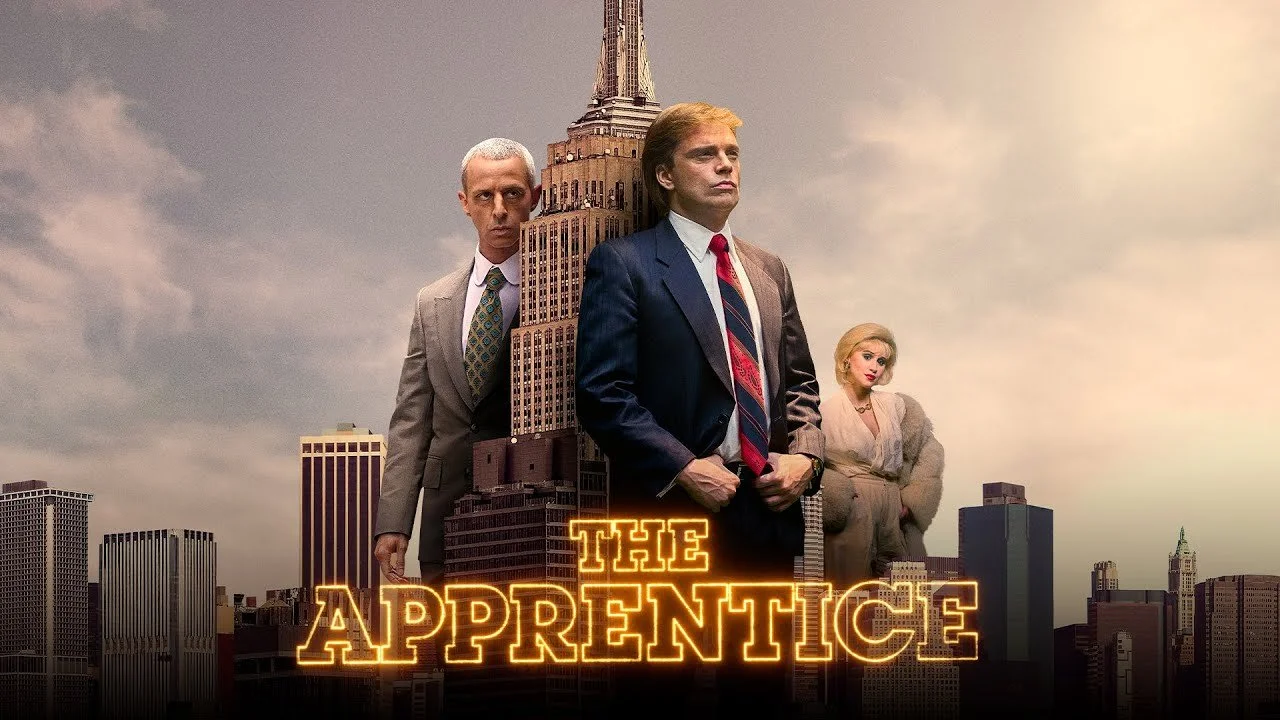
Leading from fears.
🚨 SPOILER ALERT!
The Apprentice isn’t just a political biopic — it’s a mirror.
It shows what happens when ambition, fear, and insecurity fuse together to create a version of leadership that looks powerful on the outside but is fragile underneath.
At its core, the film is a psychological study of how fear of self-worth can morph into narcissism — how someone who never felt “enough” begins to build an identity on domination, performance, and control.
Because when your inner world is unstable, you try to control the outer one.
⚖️ Effective, Yes. Healthy? Not at All.
Throughout The Apprentice, we watch a young man rise — fast, bold, relentless.
He learns to win at any cost.
He becomes effective. Persuasive. Charismatic.
But beneath that success lives something much darker: a terrified child who cannot be wrong.
His leadership “works” — but at a cost:
He cannot admit mistakes.
He cannot be vulnerable.
He cannot show emotion.
Because to him, being human equals being weak.
That’s not leadership. That’s survival.
And the irony?
The more he leads from fear, the more disconnected he becomes — from himself, his values, and everyone who once supported him. He fights, he does not connect.
His team follows him, yes.
But they follow out of fear, ambition, not the real man.
🧠 The Roy Cohn Doctrine: Power Without Integrity
In one of the film’s most chilling threads, Roy Cohn becomes his mentor — his model of “winning leadership.”
Cohn offers three principles that define this worldview:
Attack, never apologize.
Admit nothing, deny everything.
Claim victory, no matter the truth.
They sound effective — and they are.
But they’re not sustainable. See how Roy Cohn ended.
Because the foundation of this “leadership” is not truth. It’s defense. It’s lack of worth.
Not confidence. Compensation.
These three rules can win wars. But they destroy trust, and the person applying them.
They create leaders who are feared, not followed.
They produce performance, not purpose.
At LeaderNess, we see this pattern often in executives who equate worth with control.
It delivers results — but empties people from the inside out. Both the doer and the receiver.
💔 The Cost of Fear-Based Leadership
Fear-driven leadership does three things:
🔹 To the Leader: It erodes meaning and identity. Every decision becomes a performance. Every success feels hollow.
🔹 To the Team: It kills trust. People comply, not commit. They stop bringing their truth.
🔹 To Relationships: It isolates. You can’t love or be loved when you’re busy proving your worth.
The tragedy of The Apprentice isn’t the corruption of power.
It’s the corruption of self.
When you can’t forgive yourself for being imperfect, you start punishing everyone else for reminding you that you are.
💡 The LeaderNess Model in Action
At LeaderNess, we define leadership not as control — but as conscious choice.
This story embodies the difference between leading from fear and from force:
🔸 Find – He never truly finds his force. His actions are rooted in fear of not being enough.
🔸 Feed – Instead of feeding truth or empathy, he feeds validation and dominance.
🔸 Fuel – He fuels control — but not connection. Success — but not satisfaction.
Real leadership isn’t about how far you go.
It’s about who you become while you get there.
✨ Final Reflection
The Apprentice is a reminder that leadership built on fear can achieve results — but always at a cost.
It costs authenticity.
It costs connection.
And ultimately, it costs peace.
You can win every battle and still lose yourself.
You can build empires and still feel small.
The film challenges us to ask:
What if success didn’t have to mean sacrifice?
What if leadership wasn’t about being right — but being real?
Because when you stop leading from fear — and start leading from your force — you don’t just build power.
You build meaning.
There’s a different way to lead.
There’s a different way to live.
One that doesn’t demand that you pay the toll.