

🎬 What Can “Adolescence” Teach Us About Leadership?
The Silent Inheritance: How a Father’s Shame Becomes a Child’s Weapon.
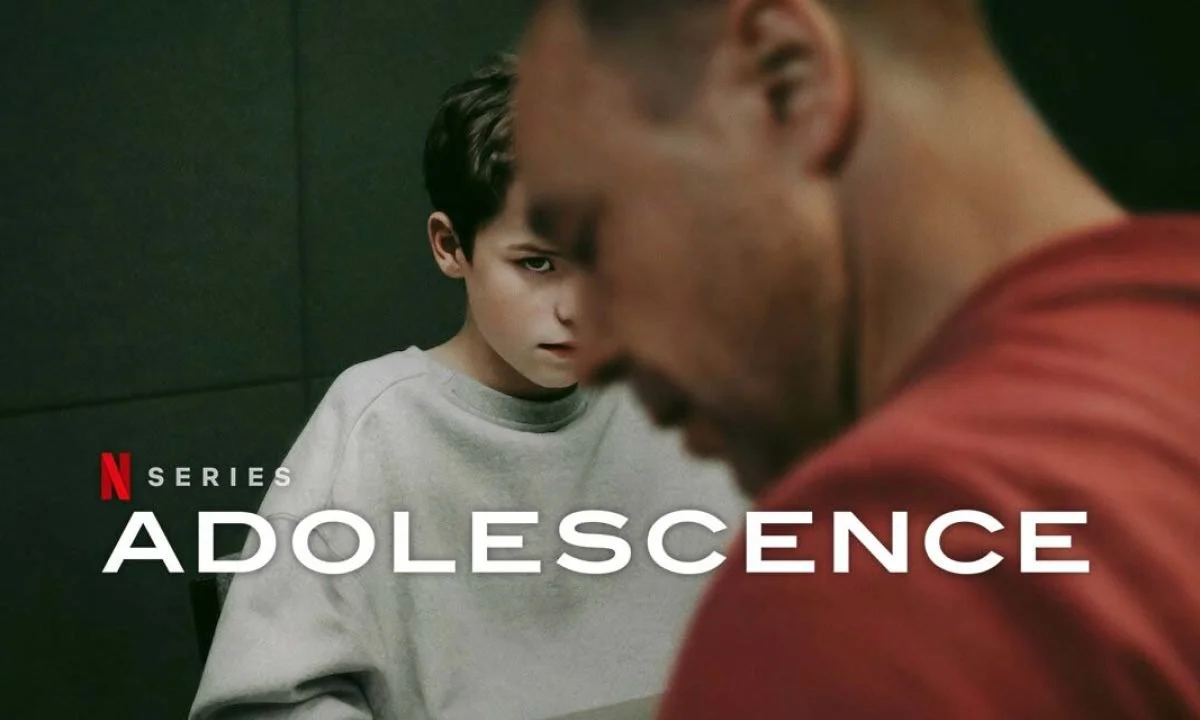
The shame of an assassin
🚨 SPOILER ALERT!
Jack Thorne and Stephen Graham’s highly acclaimed series Adolescence is fundamentally a tragedy of "Why." Over four agonizingly continuous, one-shot episodes, we are forced to ask a question that haunts every corporate offsite, every community, and every home: What turns a 13-year-old boy into a calculated assassin?
The answer isn't a grand, dark family secret; the parents aren't explicitly abusive. The rot started much earlier, buried in a seemingly insignificant childhood memory that many would dismiss: a bad day on a football pitch.
Through the unravelling of the killer, the victim, and a devastated family, Adolescence exposes how unaddressed emotional wounds create the perfect vacuum for toxic external systems to hijack our identity.
The Blueprint of the Wound: Failing the Father
During a clinical psychological evaluation, the assassin, Jamie (Owen Cooper), pulls back the layers of his defense to reveal a terminal wound. He remembers being terrible at sports. He remembers a specific day on the pitch when the other parents laughed at his inadequacy.
But the tragedy wasn’t the laughter of strangers. It was the reaction of his father, Eddie (Stephen Graham). In that moment of collective mockery, his father couldn’t even bring himself to look at him.
To a boy, a father’s diverted gaze feels like total erasure. In that moment, Jamie’s internal ceiling collapsed. He internalized a catastrophic equation: “I am inadequate. I am unmasculine. My father is ashamed of me.”
In the LeaderNess framework, this is the tragic birth of Fear-Based Self-Worth. When a child cannot secure validation from their primary source of safety, they don’t stop looking for it; they change markets. They look for any structure that promises to make them feel big.
The Digital Playground of Cruelty
Because Jamie felt like an empty, worthless vessel at home and an outcast at school, he found refuge online. The algorithms of the "manosphere" and incel message boards didn't create his wound; they just commercialized it. They offered him a twisted blueprint of masculine "Force" to compensate for his hidden "Fear."
When he tried to project this false sense of power onto his classmate, Katie, she saw through the performance. Her rejection was harsh; she labeled him an "incel" on Instagram, and the entire school joined in the digital mockery.
The algorithms did what they do best: they weaponized his original trauma. The laughter of the school was the echo of the parents on the football pitch. The collective likes on her comment were his father’s diverted gaze magnified by a thousand screens. To stop the psychic pain of being erased, the wounded child picked up a knife.
The Broken Shield: A Family in Disbelief
The most gut-wrenching perspective in Adolescence belongs to Eddie, the father. Eddie loves his son. He stands by him as his "appropriate adult" in the cold rooms of the police station, fiercely believing Jamie's initial denials. When the incontrovertible truth lands via CCTV footage, Eddie's world doesn't just shatter—it implodes under the weight of unstated accountability.
Eddie is the archetype of the well-meaning but emotionally illiterate leader. He worked hard, provided, and protected—but he managed symptoms, not the root cause. He missed the fact that every time Jamie retreated to his room and shut the door to spend hours on a computer, he was migrating away from a reality where he felt worthless.
This happens in business every single day. CEOs and executives look at high performance metrics, project a polished outer image, but remain entirely blind to the cultural rot, anxiety, and unaddressed shame boiling underneath their team until a systemic crisis occurs.
The LeaderNess Model in Action
The Series as a Psychological Balance Sheet:
🔸 The False "Find": Jamie internalized his fear of irrelevance and weakness. He looked for power in dominance because he lacked the baseline force of self-acceptance.
🔸 The Toxic "Feed": Left unguided, Jamie fed his identity with digital poison that validated his resentment. Eddie fed the material needs of the family but starved the emotional landscape.
🔸 The Destructive "Fuel": When humiliation detonated his underlying shame, the only fuel left was rage. The system optimized his isolation until it generated a catastrophe.
Final Reflection
Adolescence challenges us to redefine what it means to lead uniquely, whether at the boardroom table or the kitchen table. True leadership is not about maintaining an illusion of perfection or expecting those under your charge to never fail.
If you are a founder, an executive, or a parent, understand this: The metrics you ignore are the ones that will eventually break your system. When you turn your gaze away from someone’s vulnerability or failure because it makes you uncomfortable, you are teaching them that they are only valuable when they perform.
Look closely at the people you lead. Do they feel secure enough to show you their mistakes? Or are they hiding behind a mask of compliance, waiting for a system outside your walls to tell them who they are?