

🎬 What Can “Novembre” Teach Us About Leadership?
The Panic of Performance: Leading Under the Ultimate Pressure.
🚨 SPOILER ALERT!
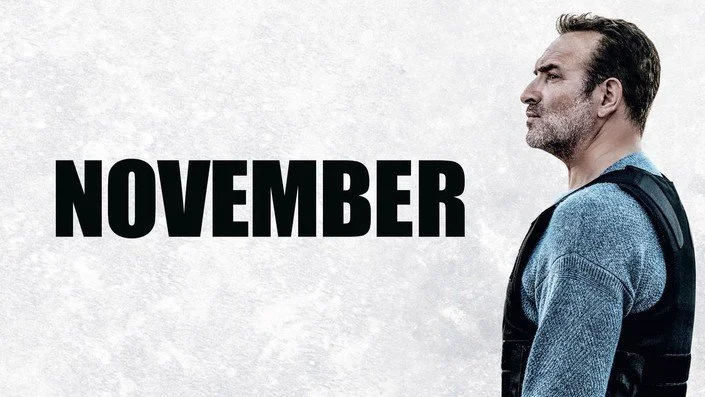
Cédric Jimenez’s film Novembre is a breathless, hyper-realistic deep dive into the five days following the horrific terrorist attacks in Paris. While the movie tracks a literal manhunt, through a leadership lens, it tracks something else: an entire counter-terrorism unit operating under the crushing weight of institutional panic.
It exposes a severe behavioral trap that affects organizations from state ministries to high-growth tech startups, the fear of performing, and the toxic metrics it creates.
The Political Demand: Results Over Reality
In Novembre, the clock is ticking loudly. Every level of leadership is gripped by a profound fear of failure. For the politicians at the top, this fear transforms into an insatiable demand for immediate results. They don't just need a solution; they need a narrative, an arrest, a headline to prove to the public that they are in control.
This is fear-based leadership cascading down the chain of command. When executives or politicians panic about performance, they stop asking for truth and start demanding metrics.
The Symptom: Pressure to look active rather than being effective.
The Danger: When an organization prioritizes the image of control over the depth of execution, it forces the front lines to cut corners.
The Police System: Taking Advantage of the Vulnerable
On the ground, this performance anxiety triggers a dangerous survival mechanism among the investigators. Driven by the fear that another attack is imminent, the line between extracting information and exploitation blurs. They begin to "take advantage" of witnesses and informants, leaning heavily on intimidation, leverage, and manipulation to wring out leads.
In the film, we see this explicitly through their interactions with key informants. The system behaves transactionally: Give us what we need, or we will crush you under the weight of the law. This is the ultimate expression of Fear-Based Management. It assumes that human beings only yield results under threat. But while pressure can extract compliance, it rarely extracts accurate, sustainable truth. In a state of fear, people don't tell you the truth; they tell you whatever will make you stop hurting or threatening them.
How a LeaderNess Style Changes the Equation
In the LeaderNess philosophy, true leadership is about shifting from Fears (control, urgency, manipulation) to Forces (authenticity, direction, empathy, and curiosity). Even in a counter-terrorism crisis, leading from Force is radically more effective.
Here is how a LeaderNess leader transforms a high-pressure system:
Empathy over Exploitation: Instead of squeezing an informant through fear, a LeaderNess leader builds psychological safety. They realize that a terrified witness is an unreliable witness. By protecting the human being first, you unlock the highest quality of collaboration.
Curiosity over Certainty: Fear causes tunnel vision. It makes leaders chase the first available suspect just to hit a metric. Force allows a leader to breathe, stay curious, and look at the blind spots that panic hides.
Congruence under Fire: A LeaderNess leader doesn't pass their own performance anxiety down to their team. They act as a psychological shield, absorbing the political pressure from the top so their operators can focus on execution, not survival.
The LeaderNess Model in Action
Find: A LeaderNess approach requires acknowledging the collective trauma and fear of the situation without letting it become the decision-maker.
Feed: It feeds internal clarity, ethical boundaries, and team resilience, refusing to trade long-term integrity for short-term headlines.
Fuel: It fuels intentional, conscious action. The team moves not out of frantic panic, but out of precise, purpose-driven alignment.
Final Reflection
Novembre reminds us that crisis doesn't create character; it reveals it. When you lead from the fear of not performing well enough, you will eventually treat your assets, your employees, or your informants as commodities to be exploited.
True leadership is holding your compass steady when the ground is shaking. You do not get results by taking advantage of others' vulnerability; you get results by anchoring your team to a higher standard of humanity, clarity, and truth.