

🎬 What Can “Good Morning, Vietnam” Teach Us About Leadership?
The Responsibilities We Dodge and the Ones We Weaponize: A Study in Fear.
🚨 SPOILER ALERT!
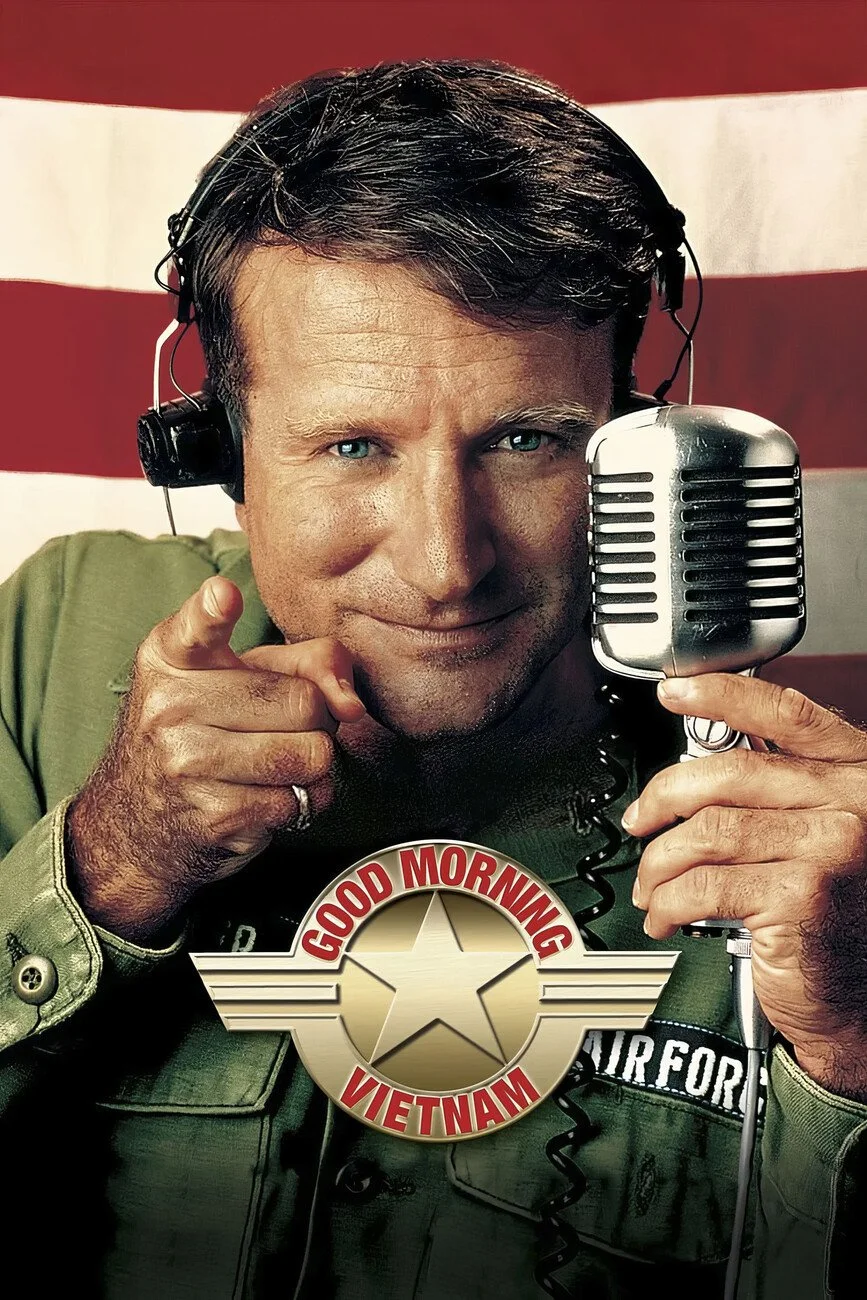
Robin Williams’ electric performance as Adrian Cronauer in Good Morning, Vietnam is widely celebrated for its manic comedic genius. But behind the microphone, surrounded by military brass during the Vietnam War, lies a brilliant case study in human defense mechanisms.
The film sets up a stark clash between two seemingly opposite leadership profiles: Adrian Cronauer, who actively avoids institutional responsibility, and his superiors (such as Sergeant Major Dickerson and Lieutenant Hauk), who are obsessed with absolute, micromanaged control.
Through the LeaderNess model, we see that these two approaches are actually two sides of the exact same coin. Distancing yourself from responsibility and trying to control everything are both reactions driven by Fear.
The Fear of Not Being Enough vs. The Fear of Failing
When we examine the tension between Cronauer and his commanders, we aren't just looking at a clash of personalities—we are looking at competing fear responses:
Distancing (Cronauer): Driven by the Fear of not being enough or Being Trapped. Cronauer hides behind his humor, his radio persona, and his refusal to take the military structure seriously. By keeping his distance and avoiding formal leadership responsibility, he protects himself. If he doesn't fully buy into the system, he can't be blamed when the system fails. His emotional detachment is an armor against the brutal reality of the war around him.
Controlling (The Command): Driven by the Fear of Failing. Lieutenant Hauk and Sergeant Major Dickerson obsess over censorship, rules, and rigid schedules. They hoard control because any unpredictability threatens their fragile self-worth. To their unhealed minds, admitting that they cannot control the reality of the war means admitting that they are inadequate as leaders.
Both sides are paralyzed by fear. One runs away from the burden; the other crushes everyone beneath it. Neither is truly present.
The Breaking Point: Moving From Distance to Connection
Cronauer’s true evolution begins when he steps outside the safety of the radio booth and interacts directly with the Vietnamese people and the young soldiers being sent to the front lines.
He realizes that comedy isn't just an escape route; it can be an authentic bridge. When he witnesses the bombing of a local bar and the hidden horrors of the conflict, he can no longer hide behind passive humor. He is forced to drop his emotional distance and take authentic responsibility for his platform—speaking the truth on air even when it costs him his job.
The LeaderNess Model in Action
Find: Leaders must identify their primary defense mechanism. Are you distancing yourself from your team out of fear of failure, or are you micromanaging them out of fear of inadequacy?
Feed: Feed true presence. Step out of the illusion of absolute control and the illusion of passive detachment. Connect with the real human stakes of your decisions.
Fuel: Fuel your action with Force. Authentic leadership doesn't mean having total control, nor does it mean stepping back. It means standing in the gap with conviction, courage, and honesty.
Final Reflection
Good Morning, Vietnam teaches us that leadership is ruined when we let our internal fears direct our external behavior.
Stop hiding behind passivity to avoid blame, and stop grasping for control to feel worthy. Drop the armor, face the uncomfortable realities of your environment, and lead from authentic force.